Under the Bucket: A November Plan for Blush-Pink Rhubarb and a Sharp Ginger Crumble
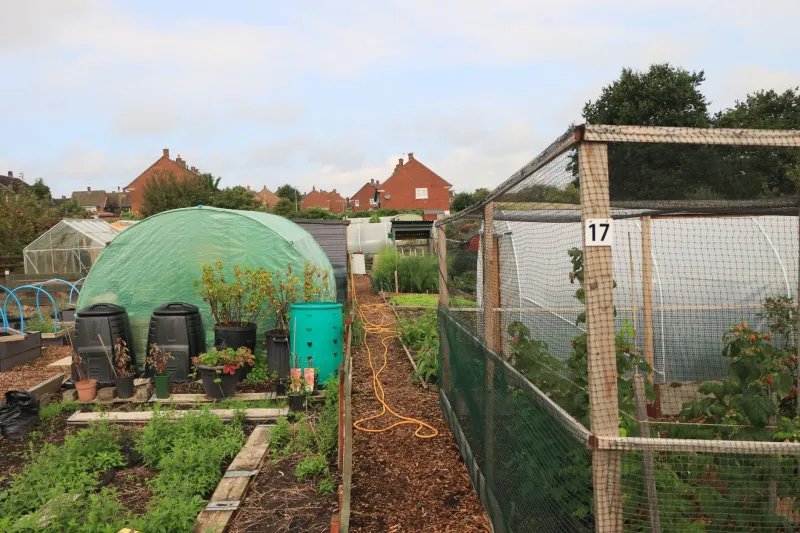
November is the month when the rhubarb patch gives up. The leaves flop, the stems go stringy, and most of us walk past it on the way to the leeks. But there’s a better use for a mature crown than leaving it to sulk: lift it, chill it, and put it under a bucket. Do it right and you’ll be pulling blush-pink stems in late winter, weeks before the outdoor stuff wakes up. This is the back-garden version of the Yorkshire forcing sheds — less scale, same principle: cold first, darkness second, and a crown with enough root to spend.
Why bother forcing rhubarb?
Forced rhubarb is not a different plant. It’s the same crown, pushed into early growth by warmth and darkness. With no light, the stems stretch and stay tender; the colour comes out pink rather than deep red, and the flavour is softer and less mouth-puckering than the tough stems of high summer. It’s a proper late-winter treat, and it fills that awkward gap when the plot is mostly mud and hope.
The catch is that forcing takes energy out of the crown. So you don’t do it to the same plant every year, and you don’t do it to a young plant that hasn’t built up reserves.
Choose a crown worth spending
Pick a two- or three-year-old crown that has grown strongly and hasn’t been forced recently. A crown forced last winter needs a year off to recover. Leave newly planted crowns alone for at least two growing seasons.
Lift the crown with a garden fork, working around it rather than chopping through the roots. You want a decent rootball, not a bare stump. Shake off the worst of the soil, but don’t wash it clean. Trim away the dead leaves and any soggy stems, leaving the crown itself intact.
Replant it somewhere convenient — a large pot of at least 30cm across, or a spare patch of ground — with the crown sitting just at soil level. If you’re using a pot, make sure it has drainage holes and use a loam-based compost rather than something too light and fluffy. The crown needs to settle in before the cover goes on.
The cold-then-cover rule
This is the bit people rush. Rhubarb needs a cold spell before forcing. The cold tells the crown that winter has happened; without it, you get weak, spindly stems and a grumpy plant.
So lift and replant in November, then leave the crown open to the weather for two or three weeks. A few sharp nights are exactly what you want. If the month is mild, wait a little longer rather than covering too early. By late November or early December, once the crown has had a proper chill, you can put the bucket on.
Set up the dark
A traditional rhubarb forcer is a tall terracotta pot with a lid. A sturdy bucket, a large upturned pot, or a dustbin will do the same job. The aim is simple: block the light, keep some warmth in, and don’t seal the crown in a fug.
Sit the cover over the crown and push it gently into the soil. If water can run in, so much the better — but don’t let the crown sit in a swamp. Surround the outside with straw, bracken, or a bit of well-rotted manure to hold a little heat. You’re not trying to build a furnace; you’re just taking the edge off the cold.
Ventilation matters. Drill a couple of small holes near the top of a plastic bucket, or prop the lid slightly and cover the gap with a slate to keep light out. Check every few days. A closed, damp bucket is a invitation to rot.
Water, air and patience
Forced rhubarb doesn’t need much water. Keep the soil barely moist — think wrung-out cloth rather than puddle. Water at the base if the ground is dry, but never tip water over the crown itself.
Check the cover weekly. On a mild day, lift it for an hour to let air move through, then put it back before dusk. If you see mould or slime, you’ve gone too wet or too airtight; ease off the watering and improve the ventilation.
Expect stems in six to eight weeks, depending on the weather. A cold snap slows things down; a mild spell speeds them up. Don’t be tempted to force the pace with a heater. The whole point is that the dark does the work.
When to pick
Harvest when the stems are 20–30cm long and properly blush pink, with small leaves still furled at the top. Pull the stems with a gentle twist rather than cutting them. Start with the outer stems and leave the small centre ones to size up.
Stop picking after six to eight weeks, or when the stems start coming thin and grassy. That’s the crown telling you it’s had enough. Uncover it gradually over a week or so, water it, and let it grow away for the rest of the year without harvesting. It needs to rebuild.
The first kitchen outing
Forced rhubarb is tender and less acidic than the outdoor stuff, so go easy on the sugar. A sharp crumble is the obvious first move. Cut 600g of stems into 3cm lengths, toss with two tablespoons of caster sugar, the zest of an orange, and a thumb of ginger, grated. Pile into a buttered dish.
For the topping, rub 75g cold butter into 150g plain flour until it looks like rough breadcrumbs, then stir in 50g oats and 50g demerara sugar. Scatter over the fruit and bake at 180°C for 35–40 minutes, until the juices bubble at the edges and the top is properly golden. Let it sit for ten minutes before serving. Cold cream is not optional.
If you want something sharper and quicker, make a ginger compote. Put 500g chopped stems in a pan with 100g sugar, a 4cm piece of ginger cut into matchsticks, and a good squeeze of orange juice. Cook gently for 8–10 minutes, until the stems collapse but still hold their shape. Cool and spoon over yoghurt, porridge, or a slice of thick toast. It keeps in the fridge for a week.
Aftercare, and next year
Once the crop is over, let the crown recover. Feed it with a handful of general-purpose fertiliser or a bucket of compost, keep it watered in dry spells, and resist the urge to pick again. Next winter, choose a different crown to force and give this one a rest. That rotation is what keeps a rhubarb patch productive rather than exhausted.
For now, though, the bucket is on. The dark is doing its slow work. And somewhere in late January or February, there’ll be a dish of pink stems on the kitchen table and a crumble in the oven — which is exactly the sort of thing a November plot is for.