The Patience Fruit: From Chalk-Hard to Custard-Soft for a Medlar Fool
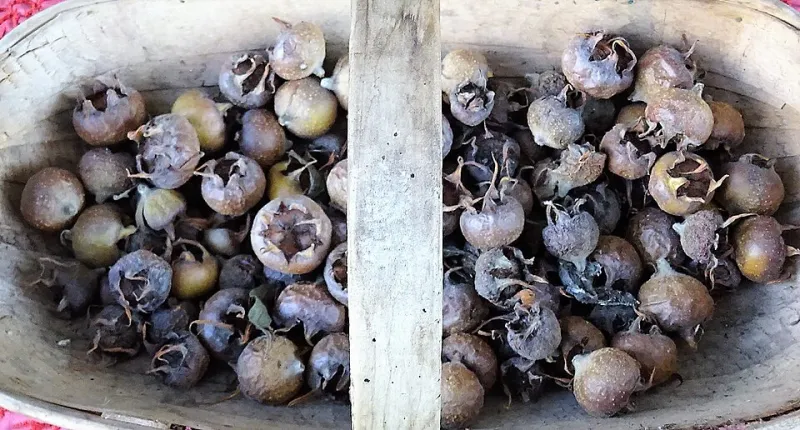
Photo: Rosser1954, CC BY-SA 4.0, via Wikimedia Commons
Medlars have a reputation problem. On the tree they look like small, rusty-brown relics, and picked too early they are hard enough to test a tooth and sour enough to make you wince. Yet give them a few weeks of careful neglect and they turn into something extraordinary: soft, aromatic, honeyed and faintly spiced. This is the November fruit that rewards patience rather than fuss.
If you grow a medlar, or know someone with a tree, you are probably in the middle of harvest season now. The fruits are often picked in late October and November, while they are still firm. The important thing is not to rush them onto a plate. Medlars need to blet — a proper ripening process that turns starch to sugar and softens the flesh — before they are worth eating.
What bletting actually means
Bletting is not rotting, though it can look worryingly close if you leave the fruit in a damp heap. The hard, pale flesh of an unripe medlar is loaded with tannins, which is why it tastes so astringent. Over time, enzymes break down the flesh and the fruit becomes brown, soft and sweet, with a flavour somewhere between baked apple, date and something gently tropical.
In the UK, medlars are traditionally left on the tree until the first frosts, but that is not always practical. Birds, wasps and wet weather can ruin them, and a hard frost does not magically fix an underripe fruit. Picking them firm and finishing the job indoors gives you far more control.
Picking at the right moment
Harvest medlars when they come away easily from the branch but are still hard. They should be fully formed and brownish-green to bronze, not green and tiny. Leave the stalk on if you can, because it makes handling easier and helps keep the fruit clean. Handle them gently — bruised fruit is more likely to go mouldy before it softens.
If you are buying medlars, look for firm, unblemished fruit. Avoid any that are already leaking or smell sour. A market stall may label them as ready to eat, but check before you believe it. Hard medlars need time.
A ripening set-up that does not become a fruit-fly nursery
The classic advice is to lay medlars in a single layer on newspaper in a cool, dark room. That works, but it also gives fruit flies an open invitation. A better approach is to use a shallow wooden tray or cardboard box lined with newspaper, then cover it loosely with a clean tea towel or a piece of fine mesh. This keeps air moving while stopping flies from moving in.
Keep the tray somewhere cool but not cold — a garage, shed, unheated spare room or cool porch is ideal. Do not put them in the fridge, because the process will stall, and do not pile them up. Check the fruit every couple of days. Remove any that are mouldy, split or weeping, and turn the rest gently so they do not sit in one spot.
Some people blet medlars in a paper bag, but I find trays easier to inspect. If you have only a few fruits, a shallow bowl lined with kitchen paper is fine. Just keep them separated and covered.
How to tell when they are ready
A bletted medlar is soft, brown and slightly wrinkled. The skin may look tired, but the flesh inside should be pulpy and fragrant. When you press it gently, it should give like a ripe avocado. There should be no hard core left.
The smell is a good guide too: sweet, appleish and slightly winey. If it smells sharp or alcoholic in a bad way, discard it. A little fermentation is normal, but a soggy, leaking fruit is not worth saving.
To use the pulp, cut the medlar in half and scoop out the soft inside, leaving behind the skin and the large stones. Push the pulp through a sieve to remove any gritty bits. You will be left with a smooth, brown purée that looks unpromising and tastes wonderful.
A medlar fool for the November table
This is a simple, old-fashioned pudding that lets the fruit do the talking. It serves four small portions, or two generous ones.
You will need:
- 350g bletted medlar pulp, sieved
- 2 tbsp icing sugar, or to taste
- A squeeze of lemon juice
- 200ml double cream
- A splash of brandy or calvados, optional
- Shortbread or ginger biscuits, to serve
Taste the pulp first. Some medlars are sweeter than others, so add the icing sugar gradually and a little lemon juice to sharpen the flavour. If you are using brandy, stir a teaspoon or two into the pulp.
Whip the cream until it just holds soft peaks. Fold in the medlar pulp gently, in two or three additions, so you keep some air in the mixture. Spoon into glasses and chill for an hour or so. Serve with shortbread or a crisp ginger biscuit.
With cheese, and a note on the tree
Medlar pulp is also excellent alongside cheese. Put a small dish of it on the table with a wedge of Stilton, a slice of mature Cheddar or a soft goat's cheese, plus oatcakes and a few walnuts. The sweet-sharp fruit cuts through the richness beautifully. It is a distinctly British sort of November supper, and it costs nothing if you have a tree nearby.
If you are thinking of planting a medlar, they are slow-growing but well-behaved small trees that suit a corner of a garden or a large pot. They are self-fertile and tolerant of most soils, though they crop best in sun. The reward is not instant, but a medlar tree gives you something few neighbours will have — and a proper November ritual in a tray on the shed shelf.